
MSPA 2025 Summer Institute
June 16-18, 2025, 8am-11:30am
“Considerations and Techniques for Assessment of Multi-Language Learners”
Meet the presenter:
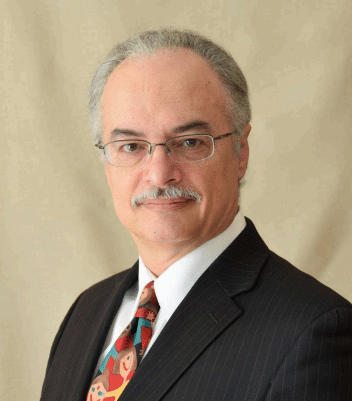
Samuel O. Ortiz, PhD
Professor of Psychology; Former Director of Graduate Programs in School Psychology at St. John's University
Dr. Ortiz is Professor of Psychology and former Director of
Graduate Programs in School Psychology at St. John’s University, New York. He holds a Ph.D. in clinical psychology from the University of Southern California and a credential in school psychology with postdoctoral training in bilingual school psychology from San Diego State University. He has served as Visiting Professor and Research Fellow at Nagoya University, Japan, as Vice President for Professional Affairs of APA Division 16 (School Psychology), as member and Chair of APA’s Committee on Psychological Tests and Assessment, as member of the Coalition for Psychology in Schools and Education, as representative on the New York State Committee of Practitioners on ELL and LEP Students, and as member of APA Presidential Task Force on Educational Disparities. Dr. Ortiz serves or has served on various editorial boards including Journal of School Psychology, School Psychology Quarterly, and Journal of Applied School Psychology and is a member of thgy (SSSP). Dr. Ortiz has published widely on a range of topics and is a frequent presenter at professional conferences as well as an internationally recognized expert on issues involving nondiscriminatory assessment, evaluation of English learners, Cross-Battery Assessment (XBA), and specific learning disabilities. He is the author of the Ortiz Picture Vocabulary Acquisition Test (Ortiz PVAT)—the first test with dual norms designed specifically for English learners and English speakers. He is also primary co-author of the Cross-Battery Assessment Software System (X-BASS v2.0), Culture-Language Interpretive Matrix (C-LIM), C-LIM+Achievement Test Extensions (C-LIM+ATE), Diverse-student True Peer Group Estimator (D-STPGE), and co-author of the Intervention Library: Finding Resources for Students and Teachers (IL:FIRST VI .0). His books include “Assessment of Culturally and Linguistically Diverse Students: A practical guide,” which is currently under revision, and “Essentials of Cross-Battery Assessment, 3rd Edition” (also under revision). Dr. Ortiz is bilingual (Spanish) and bicultural (Puerto Rican).
Sponsered By

Important Details:
Registration Deadlines:
- Mail-in registration due by May 25, 2025.
- Online registration due by June 1, 2025.
- NO Walk-in registration
Learning Objectives:
Date & Time
Monday, June 16, 2025 – Wednesday, June 18, 2025
8:00 AM (EST) – 11:30 AM (EST)
Location
Atlantic Sands Hotel & Conference Center
Oceanfront at 101 N. Boardwalk, Rehoboth Beach, Delaware
“Considerations and Techniques for Assessment of Multi-Language Learners”
Day 1
Square Pegs in Round Holes: Challenges in educating and evaluating multilingual learners—Bilinguals are not two monolinguals in one head.
Description:
Understanding the interaction among cognitive, linguistic, and academic development is critical for establishing a nondiscriminatory framework for evaluating the acquisition of school-based skills and knowledge in multilingual learners. Failure to appreciate the nature of the interaction among cognitive, linguistic, and academic development can lead to problems in the attainment of academic skills for English learners that are often mistakenly attributed to low ability or the presence of disabilities. The purpose of this presentation is to provide participants with current research on the relationship between language, cognitive, and academic development and how it may be used to guide both pre-referral decision making and post-referral assessment activities. Both the knowledge and materials gained from this presentation will provide individuals with a solid base for understanding the many challenges from diverse cultural and linguistic experiential backgrounds as they enter the school system and are expected to progress and learn in ways that are not always fair and equitable and which may mimic intrinsic signs of disability that are in fact circumstantially based and reflected in results from current evaluation methods. The workshop is designed to provide training and education in knowledge and skills that can be immediately applied in decisions regarding the impact of language and other developmental factors on academic performance that are more equitable and fair.
Learning Objectives:
Participants Will:
- Understand the nature of language acquisition vs. language learning and its implication regarding instruction and comprehensible input.
- Recognize the various myths that surround language acquisition and language development and the relevance of the processes to academic development.
- Learn the manner in which language, cognition, and achievement are developmental processes that are inter-related and interdependent.
- Know the results of various empirical studies and meta-analyses as they relate to the importance of native language instruction and achievement in English.
- Understand the relationship between education and maturation and recognize the necessity and importance of providing instruction at the appropriate level.
- Recognize the factors that constitute an appropriate referral for evaluation vs. factors that suggest the normal process of second language acquisition.
“Considerations and Techniques for Assessment of Multi-Language Learners”
Day 2
Best Practice in Pre-referral and Evaluation of Multilingual Learners: A research-based approach to establish test score validity for all practitioners, Part I
Description:
This portion of the workshop will present current research on language, cognitive, academic development, and their application to evaluation within a comprehensive, research-based framework for generating valid data to support conclusions and decisions regarding the presence or absence of various types of disorders with culturally and linguistically diverse learners. Participants will learn how current methods for addressing test score validity fail to provide satisfactory or defensible solutions and lack any evidentiary base. In addition, current research on multilingual learners will be presented in a manner that outlines what is known about their performance and how such empirical findings can be used to establish evidence-based practice and support test score validity. The knowledge and skills gained will be useful to practitioners at all levels regardless of language proficiency and provides a solid base for engaging in evaluation of multilingual learning that constitutes defensible and current best practices.
Learning Objectives:
Participants will be able to:
- Explain the advantages and limitations of traditional approaches to evaluation of individuals from diverse backgrounds including alteration or modifications in test administration, use of nonvelbal tests, and native language evaluation procedures.
- Evaluate current research in the evaluation of the extent to which the validity of various assessment approaches and test results are undermined by cultural and linguistic factors.
- Apply current research principles regarding the test performance of multilingual learners on standardized tests administered in English for the purposes of establishing true peer comparisons.
- Use the free versions of the True Peer Estimator, Culture-Language Interpretive Matrix, and the C-LIM+Achievement Test Extensions for evaluating test score validity on cognitive and academic tests.
- Interpret results from the C-LIM and C-LIM+ATE consistent with research.
- Describe the four basic steps in the comprehensive framework for nondiscriminatory assessment.
“Considerations and Techniques for Assessment of Multi-Language Learners”
Day 3
Best Practice in Pre-referral and Evaluation of Multilingual Learners: A research-based approach to establish test score validity for all practitioners, Part 2
Description:
The final part of this workshop will focus on practice issues including guidance regarding step-by-step implementation of the comprehensive framework for nondiscriminatory assessment and use of the various tools outlined in previous sessions within the context of a case study. Participants will learn how to sequence practice in a manner that assists in firmly and clearly establishing test score validity that supports defensible and equitable interpretation. Examples of validity statements and the need to generate three layers of validity evidence and their proper documentation within a general report of psychoeducational evaluation will be presented and discussed. In addition, participants will be given instruction regarding various rules governing the selection and use of scores generated via testing in English vs. the native language, using data for the purposes of SLD and other disability identification, nondiscriminatory PSW analyses, and specific guidance via a decision-making flowchart to guide practice under most circumstances. Main topics in the presentation will include use of a broad, comprehensive framework for evaluation that can be utilized by any practitioner regardless of bilingual capability, use of the C-LIM and C-LIM+ATE for evaluating exclusionary factors, and integration of the Ortiz PVAT for valid measurement of vocabulary and general language acquisition. The knowledge and skills gained will be useful to practitioners at all levels regardless of language proficiency and provides a solid base for engaging in evaluation of English learners that constitutes defensible and current best practices.
Learning Objectives:
Participants will be able to:
- Apply the basic steps and process involved in conducting comprehensive and systematic evaluation of culturally and linguistically diverse learners.
- Utilize the contemporary, evidence-based tools for addressing exclusionary criteria in evaluation and establishing valid scores for measurement of language development.
- Establish and defend the validity of obtained test scores and other data by excluding the primary influence of cultural and linguistic variables.
- Interpret standardized test scores and other data in a nondiscriminatory and equitable manner.
- Select and use appropriate data for use in disability identification including PSW analyses.
- Conduct evaluations that meet best practice standards with ELS regardless of bilingual capability.
This workshop addresses the following NASP practice model domains: Domain I : Data-Based Decision Making; Domain 2: Consultation and Collaboration; Domain 3: Academic Intervention and Instructional Supports; Domain 8:
Equitable Practices for Diverse Student Populations; Domain 9: Research and Evidence-Based Practice
Daily Program Agenda:
7:15 – 8:00 Continental Breakfast
8:00 – 9:30 Workshop Session
9:30 – 10:00 Break
10:00 – 11:30 Workshop Session
Hotel Information
The Maryland School Psychologists’ Association will provide three days of training for school psychologists interested in continuing professional development. Sessions are planned each morning from 8:00 a.m. to 11:30 a.m. The Registration fee includes three days of skill development and buffet breakfasts. MSPA has arranged special conference rates for ovemight accommodations at the Atlantic Sands Hotel (800-422-0600 or 302-227-2511). Upon registration for the Summer Institute, the code will be provided for the discounted group rate for rooms. The special rate is only available until May 16, 2025 so be sure to book before that date. In order to minimize confusion, please be aware that room reservations are made through the hotel; specific room types are requests only and cannot be guaranteed. This includes specific room numbers. The special rate ($259.00 single/double occupancy) is good for the Sunday night before the conference through the Sunday night after the conference (June 15, 2025 through June 22, 2025). You must stay at the Atlantic Sands in order to get free parking (1 space per room). If you do not stay at the conference hotel, be sure to arrive early each day in order to find parking in time for the start of the presentation.
Parking is not available at the hotel for conference attendees not staying at the hotel.
CPD/CE Credit Information
The National Association of School Psychologists (NASP) and hence the Maryland Board of Examiners of Psychologists recognize MSPA as an approved provider of Continuing Professional Development/ Continuing Education (CPD/CE) for psychologists (NASP APS #1002). MSPA maintains responsibility for the program. A total of 9 hours of Continuing Professional Development/Continuing Education (CPD/CE) are available. Documentation of attendance for 3 hours of CPD/CE credit will be provided each day to certified school psychologists and licensed psychologists who complete the entire workshop that day. Partial credit cannot be awarded. In order to receive CPD/CE credit, attendees must arrive no more than 15 minutes after the start, and may not leave more than 15 minutes before the end of the program. Please email any CPD/CE related questions directly to Gavriella Snitzer, the MSPA CPD Coordinator at cpd@mspaonline.org.
Registration
Mail in your registration form and check to: MSPA Summer Institute, PO Box 175. White Marsh. MD 21162. Mail in registration must be postmarked by May 25, 2025. Online registrations will be accepted until June l, 2025. There is a $25 late fee applied beginning May 26, 2025. Registration is limited and will be accepted on a first come, first served basis based on the postmark of the envelope or online registration date. If you would like confirmation of your registration, please include a stamped, self-addressed postcard or email Tina Wachter at program@mspaonline.org. Your attendance certificate acts as your receipt (monetary’ receipts are available upon request).
MSPA does not offer a group registration rate however, employers who register a group of 10 or more will receive 1 complimentary registration. Email the list of names as well as registration forms for each registrant to Tina Wachter at program@mspaonline.org. She will give you the total cost for the registrations.
The MSPA Program Committee recognizes the commitment of time and resources to attend professional conferences. Due to the professional setting of our activities, we cannot accommodate children at our conferences. We will make efforts at each conference to accommodate the privacy needs of nursing mothers. Thank you for understanding. Persons with questions or special needs should contact: Tina Wachter at (443) 672-8288 or program@mspaonline.org.